Seaside Escape®: Merge & Story
- 4.6
- Rating
- 10.00M
- Installs
- Free
- Price

 Analysis by App-foxy
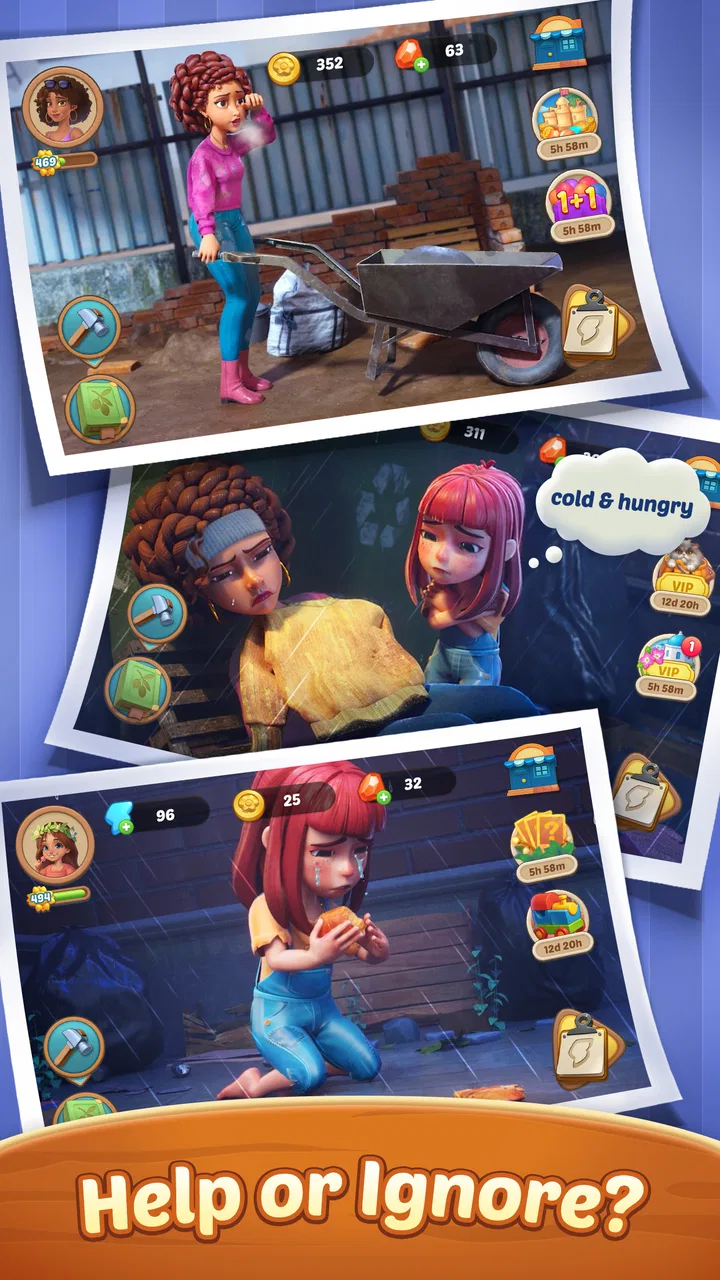
I spent time with Seaside Escape®: Merge & Story as a casual puzzle game, and my first impression was that it is trying to do more than make me combine objects. Its seaside setting, character-focused plot, and gradual rebuilding theme give the familiar merge format a reason to keep moving forward. I am not simply clearing a board for its own sake; I am helping Rowan recover from a difficult point in her life while restoring Kryphos.
That combination makes the game easy to approach. The basic idea is understandable quickly, so I never felt I needed a long tutorial before making progress. At the same time, the story gives each new task more personality than a purely abstract matching or tile puzzle. If you like relaxed mobile games with a light narrative running alongside resource management, this is the kind of title that can fit naturally into short breaks.
It is a free puzzle game from Microfun Limited, available for players rated Everyone. The current version is 1.91.0, and it runs on devices using Android 5.1 or later. The game has built a sizeable audience, with over ten million installs and a 4.6 average from roughly one hundred fourteen thousand ratings. Those figures suggest that its blend of merging, decoration, and storytelling has found a broad audience, although popularity alone does not guarantee that its pacing will suit every player.
You May Also Like

 Blood Strike: 2.5 Anniversary
Blood Strike’s Loadouts Turn Every Drop Into a Tactical Gamble
A close look at Blood Strike’s custom loadouts: how fast access to signature weapons reshapes its battle royale rhythm, rewards preparation, and narrows the gap between fights.

 Pandora - Music & Podcasts
Pandora’s Music Is Easy to Start, but Harder to Recover
Pandora’s strength is its low-effort path from a seed to a station. Its weak spot is how much confidence it asks you to place in connection, setup, and quiet recovery.

 8 Ball Pool
 Is Built on Rivalries, Rematches, and Routine
A close look at the rivalries, rematches, shared routines, and unanswered safety questions that turn a quick pool match into a persistent mobile community.

 Samsung Music
’s Quiet Strength Is Playing What You Already Own
Its reach comes less from spectacle than from dependable access to a personal library. That simplicity is both the app’s strongest retention engine and its ceiling.

 AccuWeather: Weather Radar
AccuWeather Review: A Quick, Clear Forecast for Everyday Decisions
For everyday plans, the best forecast is the one you can understand quickly. AccuWeather makes rain timing, radar, and local conditions easy to act on, with a few trade-offs.

 Hill Climb Racing
Why Hill Climb Racing Still Turns Crashes Into One More Run
A tiny car, a bumpy hill and one more upgrade: Hill Climb Racing keeps resurfacing because its simple chaos makes every near-miss feel personal.
More From Our News Desk



How the seaside rebuilding loop works
I like to think of the merge board as a small workbench for Rowan’s rebuilding effort, not just a place to clear matching pieces. Before combining anything, I check what the current task needs and keep a little room for items that may help later; that habit makes short sessions feel more deliberate and less cluttered. With that practical rhythm in mind, the next section looks at why the story gives those repeated actions a personal purpose.
A familiar puzzle idea with a personal reason to continue
The central appeal is the merge loop. You work with matching items, combine them into more useful objects, and use the results to support the wider rebuilding journey. I found this more satisfying than a standard level-based puzzle when I wanted a sense of continuity. A completed combination does not feel like an isolated win; it contributes to the impression that Rowan’s surroundings and circumstances are gradually changing.
The story is important because it gives context to the otherwise repetitive parts of the puzzle. Rowan is a disgraced actress trying to rebuild her life and Kryphos, so the game has an emotional direction from the start. I would not describe the writing as a replacement for a full adventure game, but it does provide enough narrative motivation to make the next objective feel more meaningful than simply chasing a high score.
What worked best for me was the way the game encourages a slower rhythm. I could open it, make a few combinations, complete a small objective, and leave without feeling that I had abandoned a complicated action sequence. That makes it suitable for a commute, a waiting room, or an evening when I want something interactive but not demanding.
Why planning matters more than fast tapping
The most useful habit is to avoid merging every available item immediately. Early combinations are tempting because they create visible progress, but keeping a little flexibility on the board can be more valuable than producing one larger object at once. I learned to look at the next likely objective before spending items, especially when the board began to feel crowded.
This is one of the less obvious strengths of the format. The game looks gentle, yet careless decisions can make the play area feel inefficient. A player who treats every merge as an automatic move may run out of useful space or discover that a needed chain has been broken. I had better sessions when I paused to consider whether an item was useful now, useful later, or simply occupying a slot.
My practical advice is to think in short chains rather than isolated pairs. If an item can be developed through several stages, I try to preserve related pieces near one another instead of scattering them across the board. That small change reduces the amount of rearranging and makes the puzzle feel less like tidying up after mistakes.
The value of the story and setting
The seaside location gives the game a warmer identity than a generic workshop or garden theme. Kryphos is not just a background image; it is tied to the rebuilding premise, so visual progress and narrative progress support each other. I enjoyed having a clear sense of place while working through the puzzle tasks.
Rowan’s situation also helps the game avoid feeling completely mechanical. Her starting point creates a reason to care about restoration, and the actress angle gives the story a distinct hook. Players who mainly want deep character writing may still find the puzzle loop more prominent than the drama, but those who like a casual story delivered in small portions should understand what the game is aiming for.
I would compare the experience with other merge-and-decorate games rather than with traditional logic puzzles. A pure Sudoku, crossword, or match-three title usually tests a more defined puzzle skill in each round. Here, the challenge comes from managing a growing collection, choosing when to combine, and balancing immediate objectives with future possibilities. The reward is longer-term progression, not a single clever solution.
What free access really means here
The game is free to download and play, which makes it easy to test without committing money first. That matters for this genre because the appeal depends heavily on whether the player enjoys the pace of gradual progression. I recommend trying the opening experience before deciding whether it deserves a regular place on your phone.
There are in-app purchases ranging from $0.99 to $99.99 per item. I treat that as a reason to approach the game with a clear personal limit, not as proof that spending is required. The verified cost information tells me the entry point is free and that optional purchases exist at several levels, but it does not establish that buying anything is necessary to understand or enjoy the core experience.
For me, the free access delivers enough value when I play casually and accept that progress is meant to unfold over time. The value changes for someone who wants to move quickly, remove every obstacle immediately, or keep a constant supply of resources. That player may be more tempted by purchases, so it is worth deciding in advance whether the game is entertainment for spare moments or a hobby deserving a larger budget.
I also suggest treating the highest purchase tier with particular caution. A large optional price can change the way a supposedly relaxing game feels, especially if the player starts measuring enjoyment by how quickly the next story or restoration step appears. I prefer to judge the game by the free experience first and only consider a small purchase if it solves a specific frustration rather than becoming a habit.
Where the game can become frustrating
The same slow progression that gives the game its relaxed character may bother players who want constant action. Merging is naturally repetitive, and the satisfaction often comes from accumulation rather than dramatic surprises. If I am in the mood for a fast puzzle with a clear beginning and end, this is not my first choice.
Board management is another trade-off. The more items I collect, the more important organization becomes. A crowded layout can turn a simple objective into a search exercise, and rebuilding a useful chain after an inefficient merge is not always pleasant. I found that the game rewards patience, but it does not always reward impulsive play with an equally smooth recovery.
The narrative can also be a matter of taste. I appreciated having Rowan and Kryphos as a reason to continue, but players looking for a highly complex story may want a dedicated adventure game instead. Here, the plot supports the merge system; it does not replace it. That distinction is important before installing, because the title may look story-led while the everyday activity remains puzzle management.
Another limitation is the pressure that optional purchases can create for certain players. Even when free access is enough, the presence of purchase options can make progress feel less comfortable if I compare my pace with an imagined faster route. I would skip the game if I know I dislike energy-style waiting, gradual resource loops, or any design that encourages me to solve impatience with spending.
Small strategies that improve everyday play
My first useful routine was to open the game with one modest goal instead of trying to complete everything in one sitting. For example, during a short break, I might focus on building one requested item and clearing a little space. This keeps the session satisfying even when I only have a few minutes and prevents the board from becoming an overwhelming project.
Second, I recommend maintaining a “working area” and a “reserve area” in your own layout. The working area holds items connected to the current objective, while the reserve keeps promising pieces that may be needed later. This is not a formal mode or a hidden feature; it is a player-created workflow, but it makes the merge board easier to read and reduces accidental waste.
Third, do not confuse a bigger object with better progress. Sometimes the immediate task needs a lower-stage item, and combining everything upward can leave you unable to finish it efficiently. I had more control when I checked the objective first, then merged only the pieces that served that objective. This is especially useful for anyone who tends to tap through available actions without considering the next step.
Finally, use the free version as a pacing test. Play when you naturally have spare time rather than forcing long sessions. If the gradual rhythm feels calming, the game is probably a good fit. If you repeatedly feel blocked, bored, or tempted to pay simply to restore momentum, that is useful information: the problem may not be a lack of skill, but a mismatch between the game’s tempo and your preferences.
Who will get the most from it
I think the strongest audience is players who enjoy merge puzzles with a gentle story and visible restoration goals. It suits people who like collecting, organizing, and making small improvements over repeated sessions. The Everyone rating also makes it approachable for a broad audience, although individual tolerance for the story’s themes and the game’s purchase options will still vary.
It is particularly good for someone who wants a low-pressure mobile activity after work. Imagine having ten minutes before dinner: you can open the game, make a few planned combinations, finish part of a rebuilding request, and close it without needing to remember a complex control scheme. The ongoing setting gives that small session a sense of purpose.
I would recommend it less strongly to competitive puzzle players. There is no reason here to expect the sharp score chasing of a traditional arcade puzzler, and the pleasure comes from steady development rather than mastering a short, intense challenge. Likewise, players who want a completely free experience with no purchase prompts should inspect their own comfort level before settling in.
It may also be a poor match for anyone who dislikes inventory-style organization. The board can become the main challenge, and that challenge is not about finding a single correct answer. It is about deciding what to keep, what to combine, and what to use now. If that sounds like satisfying planning, you may enjoy it; if it sounds like digital clutter, another puzzle category will probably serve you better.
Device, age, and practical expectations
On the compatibility side, the game supports Android 5.1 and later, so it is not limited to only the newest phones. I would still keep expectations realistic on older hardware: a supported operating system does not automatically mean every device will feel equally comfortable during longer sessions. The safest approach is to install it and judge the responsiveness on the phone you actually use.
The Everyone content rating makes the game broadly accessible, but that should not be confused with a guarantee that every player will enjoy its emotional premise. Rowan’s troubled starting point is part of the setup, and the rebuilding theme may appeal more to players who like character recovery stories than to those seeking purely abstract puzzles.
Because the game is free to start, the main practical question is not whether it is worth an upfront purchase. It is whether the free pacing, merge management, and story progression fit your routine. I would begin without spending, learn how the board behaves, and only then decide whether optional purchases add convenience that I genuinely value.
My final recommendation
After playing it as a casual puzzle experience, I see Seaside Escape®: Merge & Story as a good choice for patient players who want their merging to lead somewhere. Rowan’s recovery and the rebuilding of Kryphos give the repeated combinations a clear emotional frame, while the seaside setting keeps the presentation distinct from more ordinary merge themes.
Its value is strongest when I accept the intended rhythm: short sessions, careful organization, and progress that accumulates rather than arrives instantly. The free entry makes it easy to judge that rhythm for yourself, while the available purchases mean I would keep spending deliberate and limited. I would not recommend it to someone seeking rapid competitive puzzles, deep standalone storytelling, or a completely frictionless progression system.
My verdict is to try it if you enjoy merge-and-story games and like watching a place improve over time. Start by protecting your board space, plan chains around the current objective, and treat purchases as optional convenience rather than part of the basic promise. If slow, thoughtful rebuilding sounds more appealing than fast puzzle pressure, this game is worth giving a fair free trial.
FAQs for Seaside Escape®: Merge & Story
01What is Seaside Escape®: Merge & Story about?
Seaside Escape®: Merge & Story is a captivating puzzle game that combines elements of merging items with a rich narrative. Players are tasked with helping characters restore a coastal town by merging various items to complete tasks. The game offers engaging storylines, delightful graphics, and a relaxing atmosphere perfect for casual gamers.
02How do the merging mechanics work in the game?
In Seaside Escape®, players merge identical items to create new objects needed to complete different tasks and challenges. The merging mechanics are intuitive, allowing players to drag and drop items on the game board. As players progress, they can unlock new items and expand their merging possibilities, making the gameplay increasingly complex and rewarding.
03Are there in-app purchases in Seaside Escape®?
Yes, Seaside Escape®: Merge & Story offers in-app purchases. Players can buy various packages that include additional resources, such as energy or special items, to enhance their gaming experience. While these purchases can expedite progress, the game can still be enjoyed thoroughly without spending money, although it may require more patience.
04Is an internet connection required to play Seaside Escape®?
Seaside Escape®: Merge & Story generally requires an internet connection for the best experience. The connection allows players to access updates, connect with friends, and participate in special events. While some aspects of the game might be accessible offline, a stable internet connection is recommended to enjoy all features and functionalities.
05Can I play Seaside Escape® on multiple devices?
Yes, you can play Seaside Escape® across multiple devices. The game supports cloud saving, which allows you to sync your progress across different devices by logging into the same account. This feature ensures that you can continue your adventure seamlessly, whether you’re playing on a smartphone or tablet.
Pros
- Engaging storyline with captivating characters.
- Beautiful graphics enhance the immersive experience.
- Frequent updates keep gameplay fresh and exciting.
- Intuitive controls make it easy to pick up and play.
- Relaxing background music complements the theme.
Cons
- In-app purchases can be quite costly.
- Some levels may feel repetitive over time.
- Requires a stable internet connection to play.
- Advertisements can interrupt the gaming experience.
- Limited offline features restrict gameplay options.

Seaside Escape®: Merge & Story
Gallery